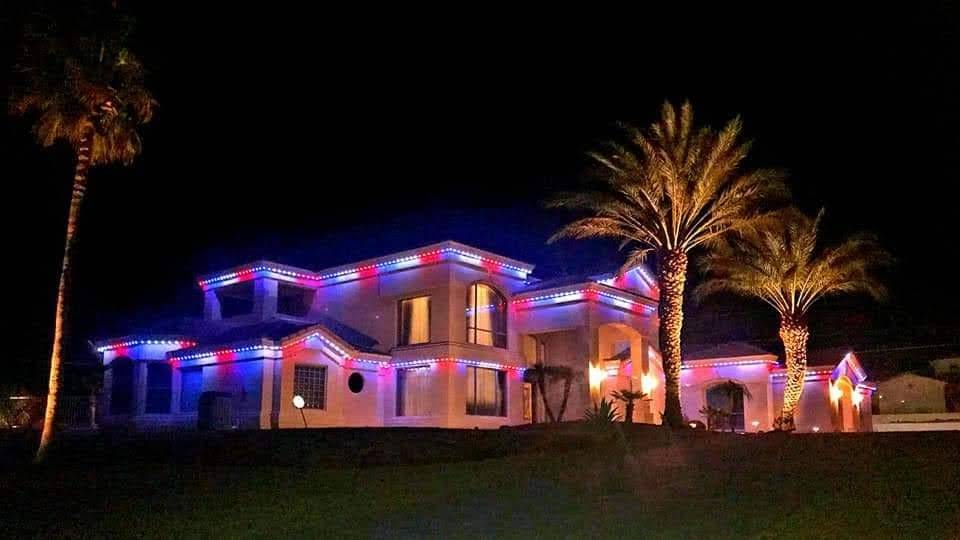
When planning your outdoor lighting, one of the most common questions we hear at Get Lit Decorative Lighting is: How many lights do I need for my yard? The answer depends on several factors—your yard’s size, layout, features, and lighting goals. This landscape lighting guide will walk you through everything you need to know to determine the right number of outdoor lights for your home.

Step 1: Understand Your Lighting Goals
Before we crunch numbers, think about what you’re trying to accomplish:
- Pathway safety
- Security around doors and dark areas
- Highlighting features like trees, walls, or water
- Creating ambiance for patios and decks
Your intended purpose will help determine not only fixture type, but also the quantity needed to achieve balanced illumination.
Step 2: Evaluate Your Yard’s Zones
Divide your yard into distinct zones, such as:
- Front yard and entryway
- Driveway
- Walkways
- Backyard patio or deck
- Garden beds
- Trees and vertical features
Each zone will require different types of lights—and different amounts. A large tree might need just one or two spotlights, while a long path might need lights every 6–8 feet.
Step 3: Use These General Lighting Guidelines
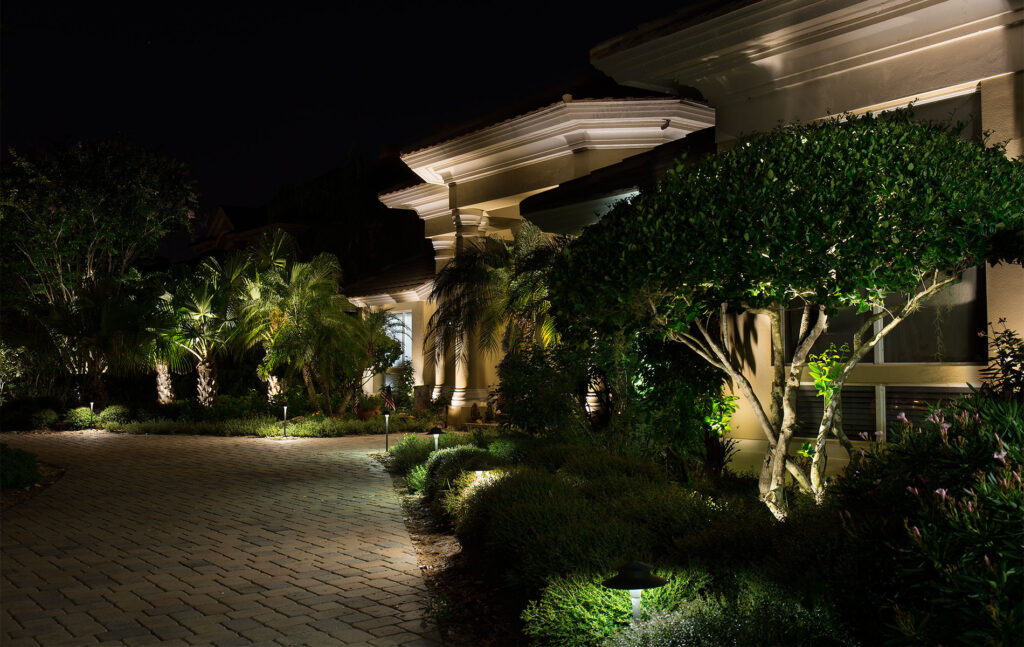
To help you get started, here’s a landscape lighting guide based on average yard features:
- Pathways: 1 path light every 6–8 feet
- Driveways: 1 light every 10–15 feet or two rows for wider coverage
- Accent Lighting (trees/statues): 1–2 spotlights per feature
- Walls and Fences: 1 wall wash or floodlight every 6–10 feet
- Deck or Patio: 1 deck light per step + ambient lighting for tables and railings
- General Areas: 1 floodlight for every 200–400 square feet
Step 4: Avoid Under- and Over-Lighting
Lighting too little can leave gaps and dark spots. Over-lighting, however, can wash out features and create glare.
The sweet spot is a balanced number of outdoor lights that enhances visibility and aesthetics without overpowering your yard.
Step 5: Consider Light Beam Spread
The angle or “beam spread” of a light affects how many you need:
- Narrow beams (15–30°): Good for tall trees or sculptures—more precision, fewer lights
- Wide beams (40–60°): Better for washing walls or general area lighting—may need more fixtures
Choosing the right beam angle helps reduce the overall number of outdoor lights while still getting the effect you want.
Step 6: Account for Fixture Brightness
LED lights come in various lumens (brightness levels). A brighter light may cover more area, meaning you need fewer total fixtures.
- 200–300 lumens: Path lights
- 400–700 lumens: Spotlights and floodlights
- 800+ lumens: Security and area lights
Using this landscape lighting guide, you can avoid guesswork by matching lumen strength to fixture purpose.
Step 7: Ask the Pros
Every property is different, and lighting plans should reflect that. At Get Lit Decorative Lighting, we offer customized lighting layouts based on your property, goals, and budget. Our team will ensure the ideal number of outdoor lights to bring your yard to life—no more, no less.
Final Thoughts
When it comes to outdoor lighting, there’s no one-size-fits-all answer. But with a thoughtful approach and the help of a proven landscape lighting guide, you can light your yard effectively and beautifully. Remember—quality, placement, and purpose matter just as much as quantity.
Not Sure How Many Lights You Need?
Let Get Lit Decorative Lighting create the perfect custom plan for your home. Request a Free Quote and get expert advice on the ideal number of outdoor lights for your property.
Next Week’s Topic: What are the most common types of landscape lighting fixtures?
(Stay tuned for Blog #4 in our 23-part series!)